
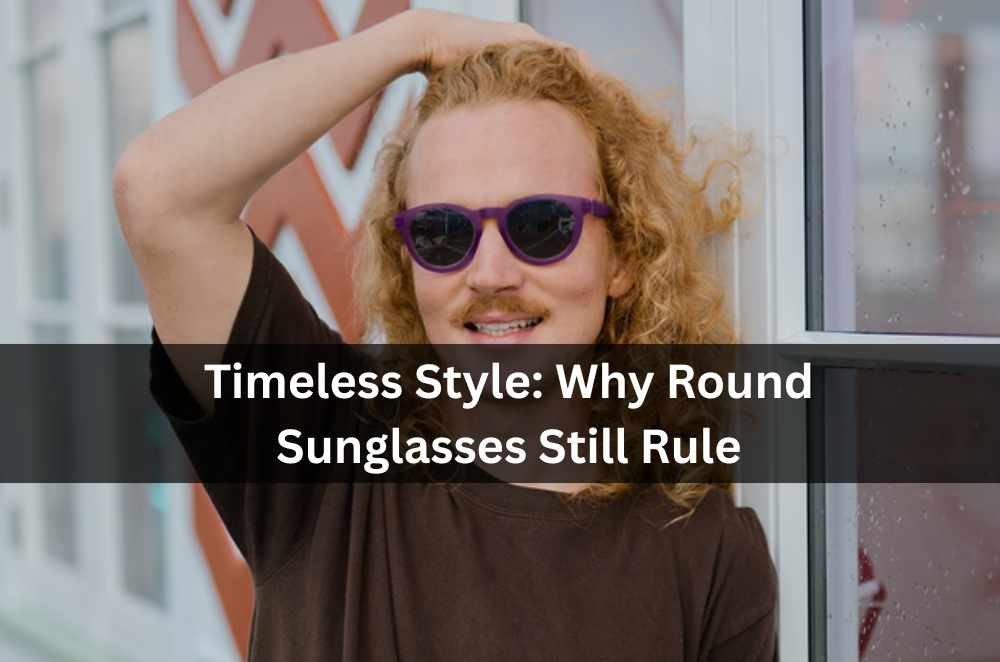
First sunny Saturday after a week of grey, I grabbed an old pair that’s been rattling around in my bag for years. They’re round, light, and a touch scuffed—yet every time I put them on, the world softens at the edges without losing clarity. That’s the quiet genius of circular frames: timeless silhouettes that don’t shout, lenses that sit comfortably on long days, and a profile that plays well with everything from tees to linen. When friends ask why I keep circling back, my short answer is simple: form plus function, no fuss. If you’re weighing shapes, round sunglasses are a steady baseline—easy to wear, easy to style, and rarely out of place.
Why round frames feel effortless on real faces
Round lenses flatter more faces than people expect, especially when size, bridge, and temple angles are set with care. The trick is balance—soft edges paired with a firm, confident fit.
Lens geometry: Gentle curvature softens hard features while keeping the field of view broad and comfortable.
Bridge fit: Correct bridge height and width to distribute weight so glasses don’t creep down your nose.
Temple alignment: Proper temple angle prevents pinch at the ear while keeping the frame centred.
Proportional sizing: Scaled diameters suit small to wide faces without swallowing features.
I’ve loaned my spare pair more times than I can count; nine times out of ten, people are surprised they work on the first try. It’s not magic—just a forgiving shape tuned in the right dimensions.
Eye health and UV protection
Style is the hook; protection is the reason you keep wearing them. The Australian sun is generous, and eyes deserve the same attention as skin when you’re outside for hours.
UV filtration: Lenses that block the full spectrum of harmful ultraviolet light help guard against cumulative damage.
Glare control: Reducing reflected brightness eases squinting and visual fatigue, especially near water and pale pavements.
Coverage logic: Slightly larger, round lenses increase protective area without the tunnel vision of extremes.
Comfort cues: If you’re still squinting, the tint or fit is wrong; comfort is your first diagnostic.
For a clear, plain-language overview of healthy habits that support vision day to day, eye care in Australia offers practical guidance you can fold into routines alongside shade and sunscreen. It keeps the conversation grounded in what actually helps over the long haul.
Picking lenses that suit how you actually live
Two pairs can look identical on a table and feel completely different under a midday glare. Match the lens to the job, and your eyes will feel calmer from breakfast to dusk.
Everyday city use: Moderate tints keep colours honest and details sharp on mixed sun and shade routes.
Coastal brightness: Strong glare near water rewards lenses tuned for contrast and reflectivity.
Driving priorities: Consistent light transmission helps your eyes adapt as you move in and out of tree cover.
Screen realism: If you’re on and off devices outdoors, neutral tones reduce colour shift and eye strain.
When people ask about the experience difference rather than the label, this balanced comparison of polarised vs tinted sunglasses is a handy background. It walks through how each option behaves so your choice feels practical, not theoretical.
Fit and feel: small adjustments, big comfort
Comfort isn’t an expensive habit; it’s the reason a pair becomes your daily default. A few tiny tweaks stop pressure points before they start.
Nose pads and bridges: Micro-adjustments distribute weight so frames settle rather than slide.
Temple pressure: Even contact along the side of the head beats tight single points that cause headaches.
Ear curve: A gentle hook behind the ear locks stability without digging on long days.
Balance check: If one lens sits higher, a quick adjustment squares the world again.
I’ve done quick curbside tweaks with nothing more than warm hands and patience; a minute of attention often turns “nice for an hour” into “fine all afternoon.” Round frames forgive more, but they still reward fine-tuning.
Materials, durability, and the quiet value of repair
Frames live in glove boxes, beach bags, and jacket pockets. Materials and construction decide whether your pair survives the real world or becomes landfill by spring.
Flexible polymers: Tough, lightweight frames shrug off small drops and rough storage without warping.
Stainless or coated hinges: Smooth action and corrosion resistance keep arms lively season after season.
Lens resilience: Scratch-resistant coatings prolong clarity, especially if you’re sand-adjacent on weekends.
Repair logic: Replaceable parts—lenses, hinges, pads—extend life and reduce waste.
A frame that can be tuned and repaired quietly saves money and the planet at the same time. Round silhouettes tend to carry well across seasons, so investing in longevity pays back every summer.
Everyday etiquette that keeps them sharp
Most scuffs and wobbles have nothing to do with quality—they come from habits. Change the habits, and the pair stays crisp.
Case discipline: A slim case in the bag prevents scratches and lens rub.
Rinse first: A quick rinse before wiping lifts grit so cloths don’t grind dust into coatings.
Cloth choice: Microfibre beats shirts; shirts hide sand and set fine scratches.
Heat sense: Dashboards cook frames; shade preserves fit and lens integrity.
A little ritual—case, rinse, cloth—turns a year of wear into three. Small habits multiply comfort in the long run.
Local care and simple checks before you buy
Trying frames in person still matters. A few quiet checks sort a lifelong favourite from a short-term fling.
Bridge honesty: If you’re nudging frames up every few minutes, the bridge or pads aren’t right.
Temple tracking: Arms should move smoothly and sit parallel; wobbles today become headaches tomorrow.
Lens alignment: Straight horizons save your brain from constant micro-corrections.
Face movement: Smile, talk, look down—frames should stay put without pressure.
For perspective on why professional advice close to home can help with fit and lens choices, a thoughtful take on local optometrists and sunglasses highlights the value of knowledgeable eyes checking small details that comfort depends on.
A simple, real-world wrap
Over the last few summers, I’ve rotated through aviators, rectangles, and a couple of experimental shapes, and I keep drifting back to circles. Not because they’re trendy—because they behave. Round frames soften angles on tired days, play nicely with casual and neat outfits, and give enough coverage without feeling like a visor. Pair them with lenses that match your life—city shade, coastal glare, or long drives—and they fade into the background the way good design should. The quiet win is maintenance: a rinse before a wipe, a home for the case, and a shady spot when the car turns into an oven. Do those small things, and the pair you buy this season will still feel right the next. That’s the real reason round sunglasses keep ruling: they take what works about simplicity, make it comfortable, and let you get on with enjoying the day.










Write a comment ...